Life Without
a Socket.
Freedom Starts Here.

Osseointegration permanently attaches your prosthetic limb directly to bone — no socket, no chafing, no limitations.

1,200+
Successful procedures
12
Global centres
1
Procedure in most cases
4–6 wks
To initial walking
The Procedure

What is Osseointegration?

Also known as Direct Skeletal Fixation (DSF), osseointegration involves inserting a titanium implant directly into the remaining bone. Your prosthetic limb connects to this implant — creating a permanent, stable, bone-anchored attachment.

This eliminates the socket entirely. One click to attach. Direct mechanical control. And a walking sensation closer to natural than any socket can provide.
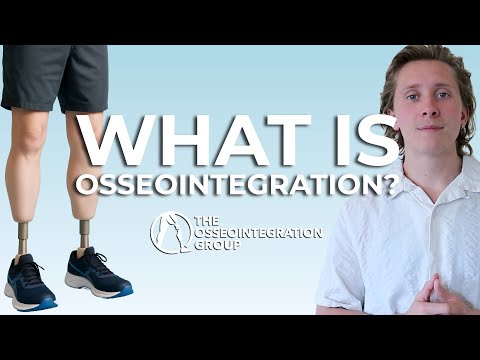
What is Osseointegration? video thumbnail
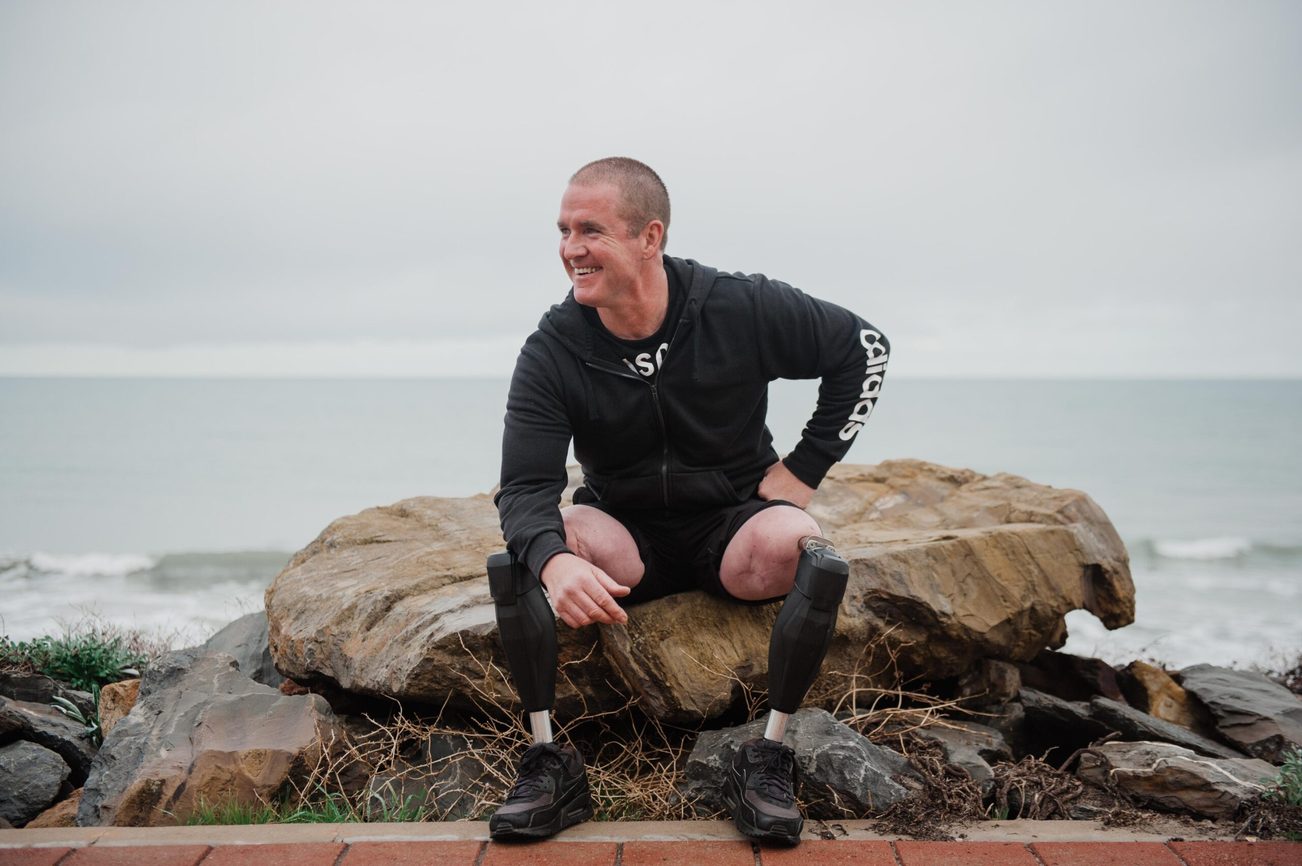
Osseointegration patient Darren, living actively after surgery
Benefits

Why Choose Osseointegration?

Compared to traditional socket prosthetics, osseointegration delivers lasting improvements across every aspect of daily life.

Avoid Socket Issues

Eliminate rubbing, chafing, pressure pain and skin breakdown caused by daily socket wear.

Reduce Pain

Say goodbye to the daily pains associated with socket use — sitting, walking or running.

Do More

Lower energy consumption and less fatigue than socket prostheses — more left in the tank for life.

Feel More

Improved proprioception lets you feel the ground and your environment through your prosthesis.

Strong & Stable

Better muscle strength and a more natural gait — confidence in every step.

Custom Fit

A customised implant ensures perfect height and alignment — no more re-fittings as your body changes.

🌍 The World's Most Experienced Osseointegration Team
1,200+
Operations performed
12
Global centres
3,200+
Peer support members
#1
Most experienced team worldwide
Your Journey

What to Expect

From your first conversation to walking with confidence — a clear, guided pathway from our clinical team.

1
Start Here

Free Suitability Assessment

Begin with a no-obligation conversation with our clinical coordinator. They'll review your history, answer your questions, and let you know if osseointegration is the right path — before any clinic visit.

2
Pre-Surgery

Clinical Assessment

A thorough in-person consultation assesses your bone quality, general health, and goals. Imaging and specialist review are completed to develop your personalised surgical plan.

3
Surgery & Recovery

Surgery & Rehabilitation

The procedure takes approximately 2 hours. Rehabilitation begins within days. Most patients are walking with a training prosthesis within 4–6 weeks, progressing to full mobility over 14 weeks.

Free suitability assessment — no commitment, no cost

Patient Stories

In Their Own Words

Real outcomes from real patients — hundreds of people have reclaimed their independence through the Osseointegration Group.

★★★★★

"Amazing! This has given me far greater freedom because of the absolute ease of walking. I no longer have to think about every step I take."

Ms Nikki C.
Below-knee amputation
★★★★★

"For two years I tried different sockets that did not allow me to walk and regain independence. This surgery changed everything."

Ms Kathy W.
Above-knee amputation
★★★★★

"Having osseointegration has returned me to 99% of the person I was before I lost my leg. The control, the confidence — it's beyond what I expected."

Mr Philip V.
Above-knee amputation

Individual outcomes vary. Osseointegration is a demanding surgical and rehabilitation process — these patients' experiences reflect their own journeys, not a guaranteed result.

FAQ

Common Questions

Everything you need to know before taking the next step.

Eligibility & The Procedure

Eligibility is individually assessed — not all amputees are suitable candidates, and we'll give you an honest answer. Assessment is based on bone quality, general health, and amputation profile. Osseointegration is available for:
  • Above and below knee (transfemoral / transtibial)
  • Above and below elbow (transhumeral / transradial)
  • Digital / finger amputation
  • Complex cases including shoulder-level and bilateral
Our team works with complex cases — including shoulder-level and bilateral amputations. Enquire to discuss whether osseointegration is appropriate for your specific situation.
For people who have been unable to benefit from other types of treatment, and where the limb is not salvageable, amputation combined with simultaneous osseointegration may be an option. Individual assessments with our multidisciplinary team would be completed to determine your suitability.
In most cases just one surgical procedure is required — unlike other osseointegration approaches that require two surgeries months apart. Recent peer-reviewed studies confirm fewer complications with the single-stage approach. For complex cases where bone lengthening or alignment correction is needed, additional procedures may be necessary — this will be discussed with you during your assessment.
No. No two osseointegration procedures are the same because no two patients are the same — varying in which limb is affected, level of amputation, bone quality, time since amputation, and individual health factors. A personalised surgical plan is developed for every patient following thorough clinical assessment.
Rehabilitation occurs in three stages over approximately 14 weeks:
  • Weeks 1–2: Initial loading until target weight-bearing is reached
  • Weeks 3–6: Fitting of a light training prosthesis; gait training begins
  • Weeks 7–14: Fitting of definitive prosthesis; advanced mobility training
Most patients are walking independently within 4–6 weeks of surgery.
Conditions like insulin-dependent diabetes can affect healing, and suitability is assessed individually. Recent advances in technique mean patients with well-controlled diabetes can often be considered. All systemic health factors are reviewed during your pre-surgical assessment.
Yes. It is possible to have the implant removed and return to use of a traditional socket-mounted prosthesis. This is uncommon, but the option is available if clinically required.

Living With Osseointegration

Yes. Once your wound has healed and you have received the go-ahead from your surgeon, swimming is actively encouraged — particularly in salt water or pools. Continuing good hygiene around the stoma site is important.
Biocompatible titanium alloy with a plasma-sprayed pure titanium surface coating that actively encourages bone in-growth. The implant is custom-designed for the Osseointegration Group and is unaffected by normal temperature variation.
No. Antibiotics are part of our post-operative infection reduction protocol, but are not typically required long-term. Good stoma hygiene and regular clinical follow-up are the mainstays of ongoing care.
With an adequate level of private health insurance, hospital fees are typically covered. Non-insured patients can be referred to a public hospital waiting list. Funding for the external prosthesis (connectors, knees, feet, or arms) is generally separate. A detailed funding plan covering your specific options is presented during your initial consultation.

Risks & Complications

Osseointegration is a major surgical procedure and carries real risks. Like all surgery, general complications can include adverse reactions to anaesthesia, bleeding, and deep vein thrombosis. In addition, complications specific to bone-anchored implants include:
  • Infection: Nearly all patients experience at least one superficial infection, typically soon after surgery. Superficial infections are usually treated with antibiotics. Deep infections are less common but may require surgical intervention.
  • Tissue granulation: The implant rubbing against the stoma opening can cause an overgrowth of connective tissue (hypergranulation), which may cause discomfort. This is usually treated with silver nitrate.
  • Stoma ooze and odour: Some leakage from the stoma site is common, particularly with increased activity. Individual factors and hygiene practices affect the degree of this.
  • Periprosthetic fracture: A fracture of the bone around the implant, most commonly caused by a fall or impact. Treated surgically, as with other fractures.
  • Implant loosening: If bone fails to integrate fully with the implant, loosening may occur. In such cases the implant is removed, and re-implantation may be considered once infection is ruled out.
  • Pain: Stoma irritation, phantom limb pain, and neuroma pain can all occur. Several medical and surgical pain management options are available.
  • Revision surgery: Under certain circumstances — including soft tissue changes, implant loosening, or deep infection — revision of the osseointegration may be necessary.
Our multidisciplinary team works to minimise your individual risk through careful pre-surgical assessment and structured follow-up care. All risks will be discussed in detail during your consultation.
Both socket and osseointegrated prostheses carry their own pain profiles. Sockets are associated with pressure-related pain, blisters, skin breakdown, abscesses, and chafing. Osseointegration carries risk of stoma pain, granulation, and infection at the implant site. Phantom limb pain can occur with any prosthetic type. Clinical evidence indicates that overall mobility and quality of life outcomes are significantly better with osseointegration — however, it is not a pain-free procedure, and individual outcomes vary.
A small fraction of cases worldwide have required replacement or removal of the implant. The Osseointegration Group has one of the lowest revision rates in the field, attributable to the single-stage surgical approach, implant design, and structured post-operative care. All outcomes data is available on request and discussed during consultation.
Get Started

Enquire in Confidence

Complete the form and our patient care team will be in touch within 1–2 business days to discuss your situation.

📍
Location
Macquarie University Hospital, Sydney
📞
Call our clinical coordinator
+61 475 520 505
🌏
International patients
We work with patients from all countries across 12 global centres
🔒 Completely confidential. No commitment required — this is an initial conversation to understand your situation and answer your questions.
Start Your Inquiry

Our patient care team is ready to guide you through the process.

Take the first step toward a new future.